How to Write an Instagram AI Prompt That Actually Gets Viewed
A social media manager copies a 40-second widescreen product prompt into a video generator, expecting an Instagram Reel. The output comes back beautifully cinematic — and completely wrong for the platform. Cropped framing cuts the product label off on both sides. The opening lingers on an establishing shot for three full seconds. There’s no hook in the first frame. The post runs, gets a fraction of normal engagement, and gets quietly deleted two days later.
This scenario repeats constantly. Standard AI video prompts assume horizontal, long-form viewing. Instagram breaks those assumptions at every level — the aspect ratio, the duration, the attention window, even the sound settings. The prompt itself has to be rebuilt for 9:16, short duration, and an immediate hook. That rebuild is the difference between a clip that stops thumbs and one that gets scrolled past.
Why Instagram Breaks the Default AI Video Prompt
Instagram Reels and Stories impose a set of constraints that most AI video prompts never account for. The platform is built around vertical 9:16 framing, sub-30-second clips, and a hook in the first second. Viewers scroll with sound off by default, which means the visual first frame carries the entire burden of stopping the scroll.
Prompts written for landscape demos or long cinematic shots underperform here for structural reasons, not quality reasons. A prompt that works for a YouTube intro or a website hero video will produce output that’s framed wrong, paced wrong, and missing the immediate visual payoff Instagram demands.
The habit of copying generic templates makes this worse. Most shared AI video prompts floating around were written for widescreen output. Drop one into a generator without adjusting the framing instructions, and the result is an off-center subject with dead space on both sides — exactly what happens when a landscape-oriented scene gets cropped to vertical.
Instagram Reels support up to 90 seconds, yet most videos that hold attention sit in the 7–15 second range. Prompt duration constraints should target that window. A 40-second prompt instruction will produce a 40-second clip, and on Instagram that’s already fighting the platform’s natural attention curve.
The core friction is that AI video generators silently default to wider aspect ratios. Vertical framing must be explicitly encoded in the prompt text rather than assumed. “9:16” and “vertical composition” are not optional modifiers — they’re structural requirements that change how the generator frames every shot.
The Anatomy of a Working Instagram AI Prompt
A working Instagram AI prompt has identifiable building blocks: subject, scene, camera movement, lighting, motion detail, and duration output. Each one needs explicit instruction, and the vertical framing needs to be encoded into the text itself.
The subject line should name the object or person clearly and specify what matters about them. For a product clip, that means naming the bottle, the label position, the color, and the angle. The scene establishes context — a countertop, a studio backdrop, a hand holding the item. Camera movement tells the generator whether to push in, orbit, or hold steady. Lighting cues set the mood. Motion detail describes what moves within the frame. Duration output caps the clip length.
For short-form Instagram clips, micro-motion carries more weight than scene complexity. Hair movement, steam rising, liquid swirling — these small details are what viewers register in the first second of playback. A complex scene with static elements reads as “AI-generated” faster than a simple scene with convincing micro-motion. This is counterintuitive because most prompt writers focus on describing the scene, not the motion within it.
Most AI video generators interpret prompts reliably in the 60–100 word range. Prompts that exceed that lose control of framing and motion — the generator starts picking which instructions to follow and which to drop. The official video generation prompt guide recommends keeping instructions focused and avoiding conflicting directives.
Common verbs and modifiers signal the right visual language. “Close-up,” “macro,” and “extreme close-up” push the camera in. “Handheld” adds natural instability. “Slow push-in” creates tension. “Steadicam” smooths movement. These terms translate reliably across generators like Gemini video generation, Veo, and Seedance.
Aspect ratio tokens matter too. Writing “vertical 9:16 composition” or “portrait orientation, full-frame subject” directly into the prompt text changes output framing in ways that “Instagram video” alone doesn’t. The generator needs the spatial constraint spelled out.
For brands working in cosmetics, the framing details are specific — the label must stay readable, the nozzle must stay in frame, the bottle shape must remain intact. A prompt library with cosmetic product video prompts shows how these constraints get encoded into working examples.
Prompt Templates for Instagram’s Most-Watched Formats
Three template structures cover most of what brands actually post on Instagram: product showcase close-ups, food and drink commercials, and beauty or lifestyle clips. Each follows the same skeleton with different variables.
| Format | Core subject line | Camera & motion | Lighting cue | Best used for |
|---|---|---|---|---|
| Product showcase | Named product, full label visible | Slow push-in, macro detail | Soft studio, even exposure | E-commerce drops, launches |
| Food & drink commercial | Dish or drink, steam/motion active | Handheld orbit, close crop | Warm directional light | Menu features, seasonal items |
| Beauty & lifestyle | Model or product, skin texture visible | Steady close-up, micro-motion | Natural window light | Brand storytelling, tutorials |
A product showcase template starts with the subject line naming the item and its key visual features. The camera instruction calls for a slow push-in with a macro pass over the label. Lighting stays soft and even. Duration caps at 10 seconds.
A food commercial template centers on the dish with active motion — steam rising, sauce swirling, a utensil breaking the surface. Camera work is handheld and close. Lighting runs warm and directional. The clip runs 8–12 seconds.
A beauty template puts the product or model in natural light with visible skin texture. Camera movement stays steady. Micro-motion — hair shifting, product spreading — carries the visual interest.
A single core template with altered subject and lighting variables typically produces usable variations for 5–10 different products before the output starts feeling repetitive. The subject line changes, the lighting cue shifts, and the rest of the structure holds.
Adapting one template across a product range means changing only the variables that matter: the product name, the color, the label details, and the lighting mood. The camera instruction and duration stay constant.

Pre-validated prompt examples save the trial-and-error phase. A coffee latte commercial prompt shows how steam and liquid motion get encoded. A beauty brand video prompt example demonstrates the lighting and texture language that reads as premium rather than synthetic. The complete prompting guide for Seedance covers how different generators interpret the same instruction set, which matters when a template needs to work across tools.
Remixing Prompts So the Feed Doesn’t Go Stale
The fastest way to kill an Instagram presence with AI video is to stop varying the prompts. A brand reused the same template across six posts in two weeks with only the product name changed. Engagement dropped by roughly half, and followers started commenting that the clips looked obviously generated. The accounts had to pull the series and rework the entire prompt library.
Remixing a proven prompt means changing one variable at a time. Camera angle shifts from eye-level to low. Lighting moves from soft studio to warm directional. Background changes from clean white to textured. Duration compresses from 12 seconds to 8. Each single change produces a visibly different clip while keeping the core structure intact.
Changing two or fewer variables per iteration keeps output coherent. Changing three or more at once typically produces unusable results that require re-generation. The generator loses the thread of what made the original work.
Spotting the repetitive “AI tells” matters for quality control. Common markers include waxy skin texture, unnatural hand positions, liquid that moves too smoothly, and backgrounds that shift subtly between frames. These artifacts read instantly to viewers even when they can’t name what’s wrong.
Community-rated prompts and view counts offer a shortcut to picking winners before remixing. Prompts with high ratings and high view counts have already been validated across many generations. Starting from those reduces the iteration count. A skin-care commercial prompt reference with strong community metrics gives a reliable base to modify.
The tradeoff between speed and originality is real. Popular templates get reused heavily, which means the feed fills with similar-looking clips. But writing entirely from scratch every time is slow and inconsistent. The practical middle ground is maintaining a small set of core templates and remixing them aggressively — changing camera, lighting, and motion variables to keep the output fresh.
Prompt generators like the Veo prompt generator can accelerate the remix process by producing variations on a base prompt quickly. The output still needs human judgment about what fits the brand and the platform.
From Prompt to Published Without the Friction
The day-to-day workflow looks straightforward: copy a prompt, adjust it for a specific product, generate a clip, export, schedule. In practice it breaks down in predictable places.
Version confusion is the first failure point. A prompt gets tweaked for one product, then tweaked again for another, and suddenly nobody remembers which version produced the approved clip. The approved version and the posted version drift apart without anyone noticing until the output looks wrong.
Lost prompts are the second failure point. A prompt that took 40 minutes to refine gets pasted into a generator, the tab closes, and the text is gone. Rebuilding it from memory produces something close but not identical, and the subtle differences show in the output.
Re-typing the same prompt across tools wastes time and introduces errors. A prompt that works in one generator gets manually retyped into another and loses formatting or picks up typos.
Teams that maintain a reusable prompt collection report cutting per-clip ideation time from around 40 minutes to roughly 10 minutes after the first batch. The first batch takes effort to build, but every subsequent clip starts from a validated base rather than a blank field.
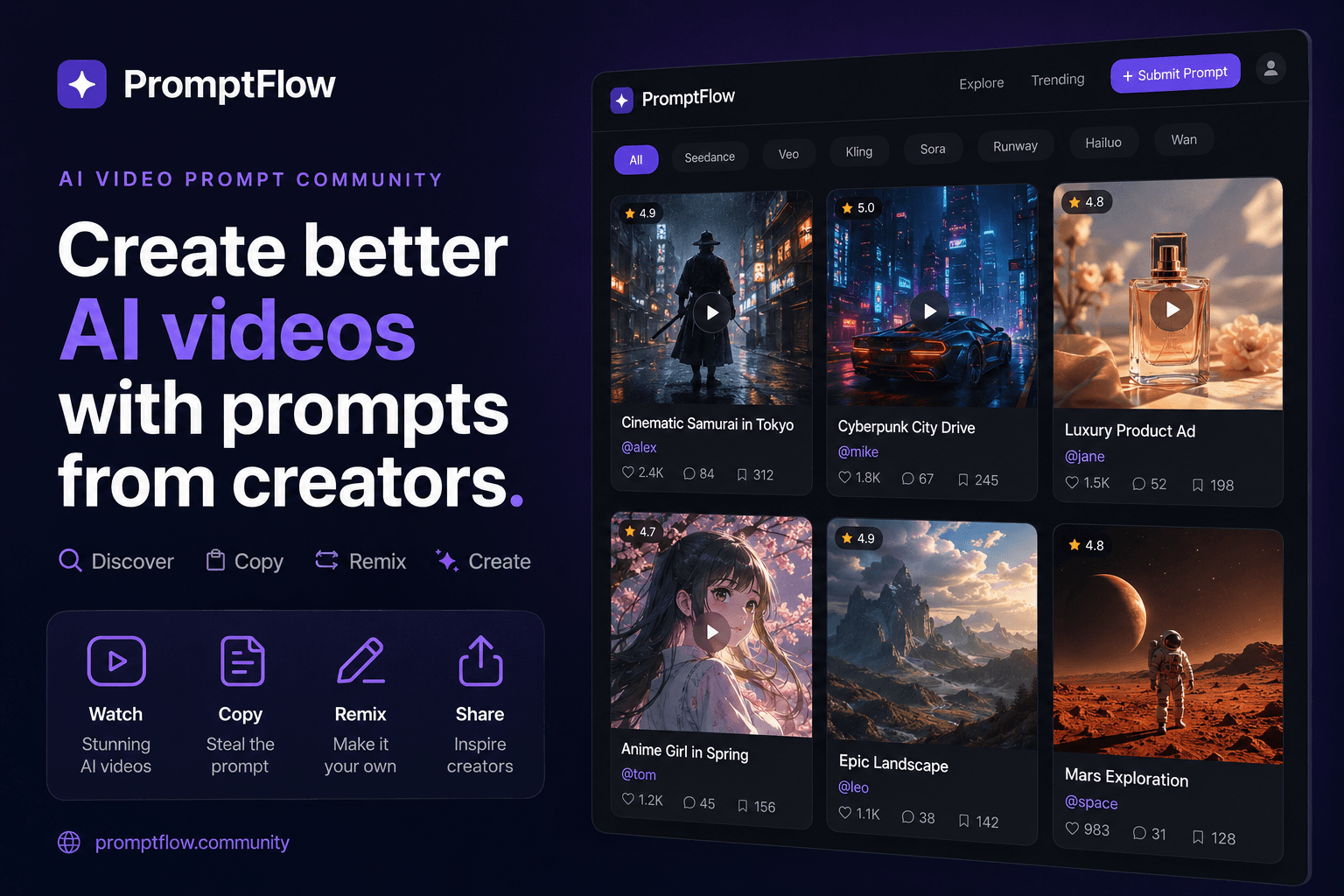
Keeping a searchable prompt library solves the version and loss problems. A platform like VideosPrompt stores prompts with their metadata, so the approved version is always findable and the drift between what was approved and what got posted disappears. The copy-remix-generate workflow replaces the copy-from-a-chat-window workflow.
The production pipeline gets faster when the prompt library is the source of truth. A clip that used to take an hour of prompt writing, generation, and re-generation now takes a few minutes of selection and adjustment. The bottleneck shifts from prompt creation to actual generation and review, which is where the time should go.
Export and scheduling still need their own discipline. Generated clips should be reviewed at full resolution before scheduling, because preview renders can hide framing issues that show up in the final export. And the 7–15 second window remains the target regardless of what the generator produces by default.
FAQ
How long should an Instagram AI video prompt be?
Aim for 60–100 words. Prompts in that range give the generator enough instruction to control framing and motion without overwhelming it. Under 60 words and the output loses specificity; over 100 words and the generator starts dropping instructions.
Can the same AI prompt be used for both Reels and regular feed posts?
Technically yes, but the output will look wrong for one of them. Reels need 9:16 vertical framing and a first-second hook. Feed posts can use either orientation but benefit from different pacing. Write separate prompt variants for each format rather than forcing one prompt to serve both.
Will an AI video generator format video as 9:16 on its own, or does the prompt need to specify it?
The prompt needs to specify it. Most generators default to wider aspect ratios, and vertical framing must be explicitly encoded in the text. Write “vertical 9:16 composition” or “portrait orientation, full-frame subject” directly into the prompt.
What makes an AI product video for Instagram look obviously AI-generated, and how can that be avoided?
Waxy skin texture, unnatural hand positions, overly smooth liquid motion, and backgrounds that shift between frames are the common tells. Avoiding them means keeping scenes simple, prioritizing micro-motion over scene complexity, and reviewing output at full resolution before posting.
How can a prompt be reused across multiple products without the results feeling repetitive?
Change one or two variables per iteration — camera angle, lighting, background, or duration. Changing three or more variables at once produces incoherent output. A single template with altered subject and lighting typically yields usable variations for 5–10 products before it starts feeling repetitive.
Share Article